Content Batching: A Weekly Sprint Workflow
Content batching as a weekly sprint: ideas Monday, scripts Tuesday, design Wednesday, scheduling Thursday, plus clean handoffs and five numbers to track.
Map a repeatable weekly sprint
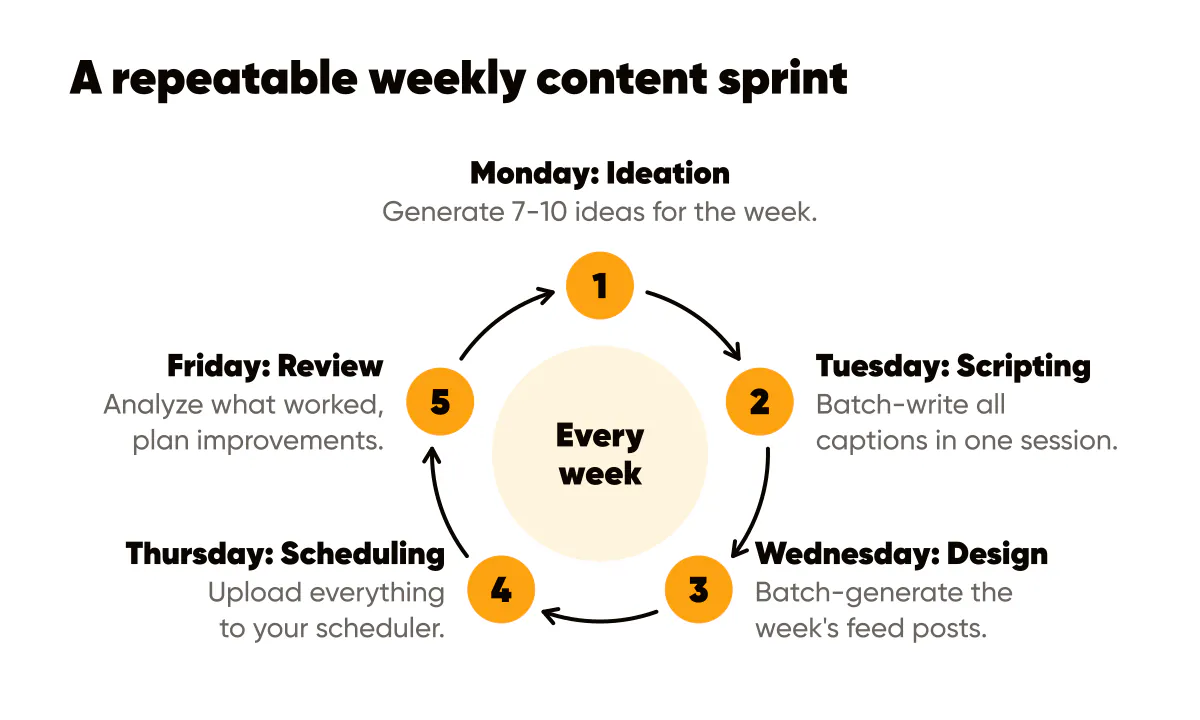
Dedicate Monday to ideation, Tuesday to scripting, Wednesday to design, and Thursday to scheduling. Guard Friday for review and optimization. This structure eliminates decision fatigue: you know what you're doing each day, so you can focus on execution, not planning.
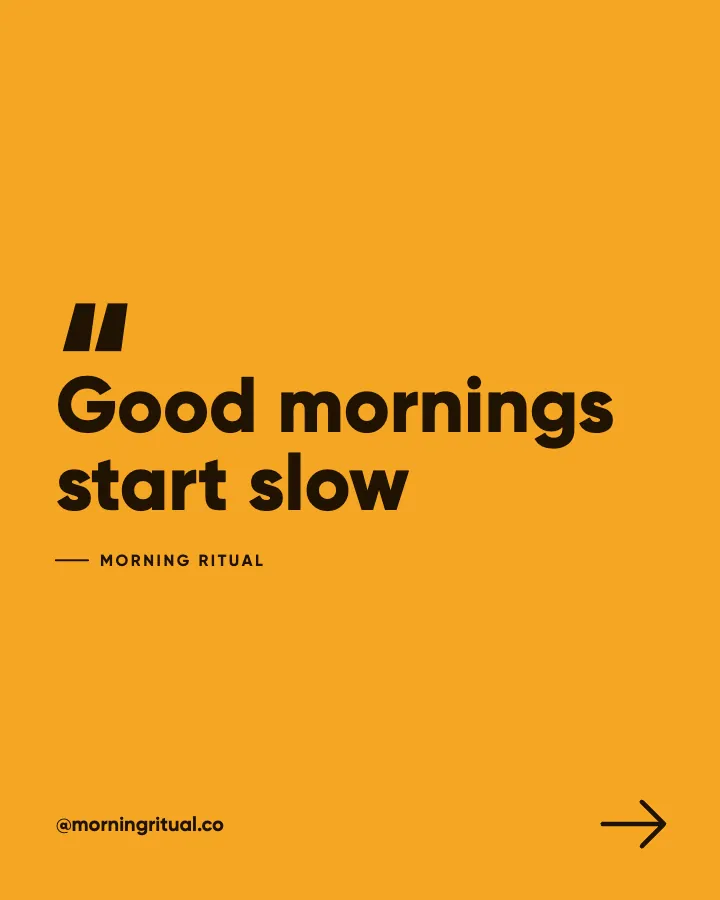
Monday ideation should be focused: review your content pillars, check what's performing, and generate 7-10 ideas for the week. Use AI tools to expand on concepts, but don't get lost in ideation. Set a timer and move on. Tuesday scripting is about turning ideas into captions. Batch-write all captions in one session using your proven templates. Wednesday design is visual creation day: use an AI social media post generator like Creobee to batch-generate the week's feed posts, each a branded 4:5 image with its headline and caption. Thursday scheduling means uploading everything to your scheduler and setting publish times. Friday review is about analyzing what worked and planning improvements.
This sprint structure works because it creates momentum. Each day builds on the last, and by Thursday you have a complete week of content ready to go. No more scrambling daily or wondering what to post. The system removes friction from content creation.
Automate handoffs
Keep assets per campaign in one shared folder, in whatever drive your team already uses. Pair it with an AI caption sheet so your team can hand off without Slack back-and-forth. Create a standard folder structure: Campaign Name > Week > Assets. Include captions, visuals, and any reference materials in one place.
Build templates for common handoff documents: content briefs, visual specs, performance tracking sheets. When someone needs to take over, they have everything they need without asking questions. This reduces bottlenecks and keeps production moving.
Use AI to generate caption variations and visual concepts. Feed your content brief into ChatGPT or Claude, get multiple options, then refine. This speeds up ideation and scripting phases significantly. The goal isn't replacing human creativity. It's removing repetitive work so you can focus on strategy and refinement.
Measure velocity weekly
Track these metrics every week to optimize your process:
- Posts shipped: are you hitting your target volume? If not, where are bottlenecks?
- Hours spent per stage: which phase takes longest? Can you optimize or automate it?
- Engagement delta after each sprint: are your batched posts performing as well as daily-created ones?
- Time to publish: how long from idea to scheduled post? Can you reduce this?
- Quality score: rate your content 1-10. Is batching affecting quality?
Use this data, tracked the way our creative performance guide suggests, to refine your process. Maybe ideation takes too long: add constraints or use AI more. Maybe design is the bottleneck: create more templates. The goal is continuous improvement, not perfection. Each week should be slightly more efficient than the last.
Build your content machine
Over time, your weekly sprint becomes a content machine. You have proven templates, clear processes, and reliable systems. New content creation becomes faster because you're not starting from scratch: you're working from proven frameworks.
Document your process as you refine it. Create checklists, templates, and standard operating procedures. When you bring on team members or scale, you have a playbook to follow. The system becomes your competitive advantage: consistent, high-quality output at scale.

Put it into practice
Turn this into posts designed for your feed
Paste your website. Creobee reads what you sell, then plans, writes and designs your posts about it as one feed in your logo and colors, captions included, and on Autopilot it posts them for you.
How the AI content calendar generator works