Hooks for Social Media Posts: 3 Honest Formulas
Hooks for social media posts that stop the scroll without clickbait: the contrast, promise-proof-preview and question formulas, with examples to adapt.
Use contrast to wake the feed
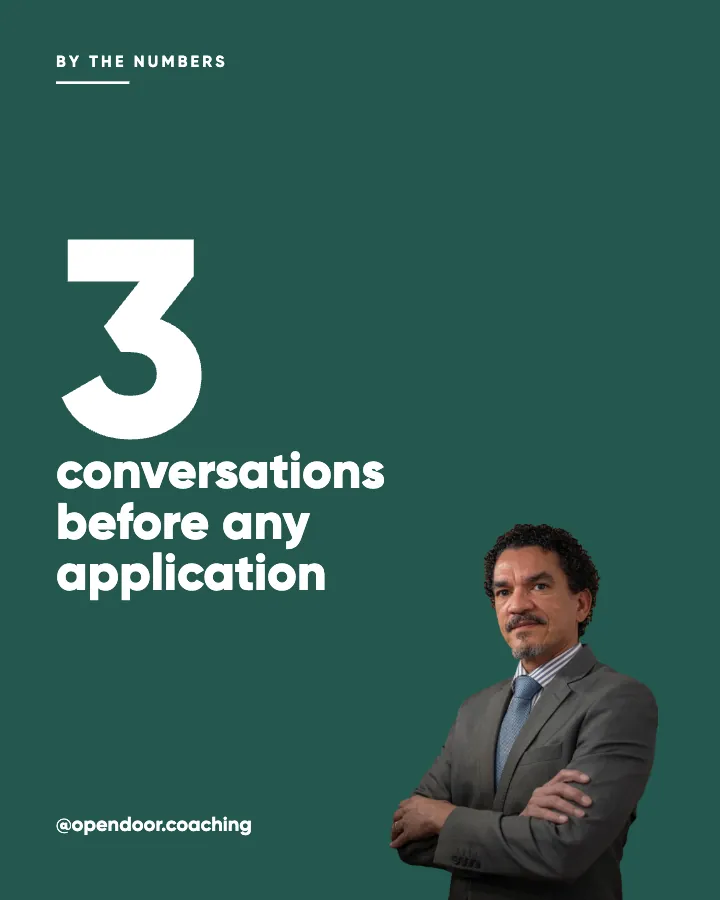
Contrast hooks pair a surprising stat with a relatable pain. Example: "Most founders post daily. The top 1% post the same idea 12 different ways." Pair it with a bold, high-contrast graphic for instant thumb-stop. The contrast between what people think (posting daily = success) and what actually works (repurposing strategically) creates cognitive dissonance that stops the scroll.
The formula is simple: unexpected truth + relatable situation = engagement. "Everyone says X, but the data shows Y" works because it challenges assumptions. "You're doing A, but top performers do B" works because it creates curiosity about the gap. The key is making sure your contrast is surprising but believable: too wild and people dismiss it, too obvious and they keep scrolling.
Visual contrast matters just as much. Use bold typography, contrasting colors, and clear hierarchy in your designs. The hook should be immediately readable at thumbnail size, and the visual should reinforce the message. A shocking stat deserves a bold, high-contrast design. A subtle insight works better with softer visuals that invite closer reading.
Promise, proof, preview
Start with the promise, drop a proof point, then preview the value. This three-beat rhythm keeps bounce rates low and improves average watch time on carousels. The promise sets expectations ("You'll learn how to 10x your engagement"). The proof builds credibility ("This worked for 500+ creators"). The preview creates urgency ("Here's the first step...").
In practice, this looks like: "I doubled my email list in 30 days using this simple framework [promise]. Here's the exact system that got me from 200 to 2,000 subscribers [proof]. Slide 2 shows you the template I used [preview]." Each element builds on the last, creating a logical flow that keeps people engaged.
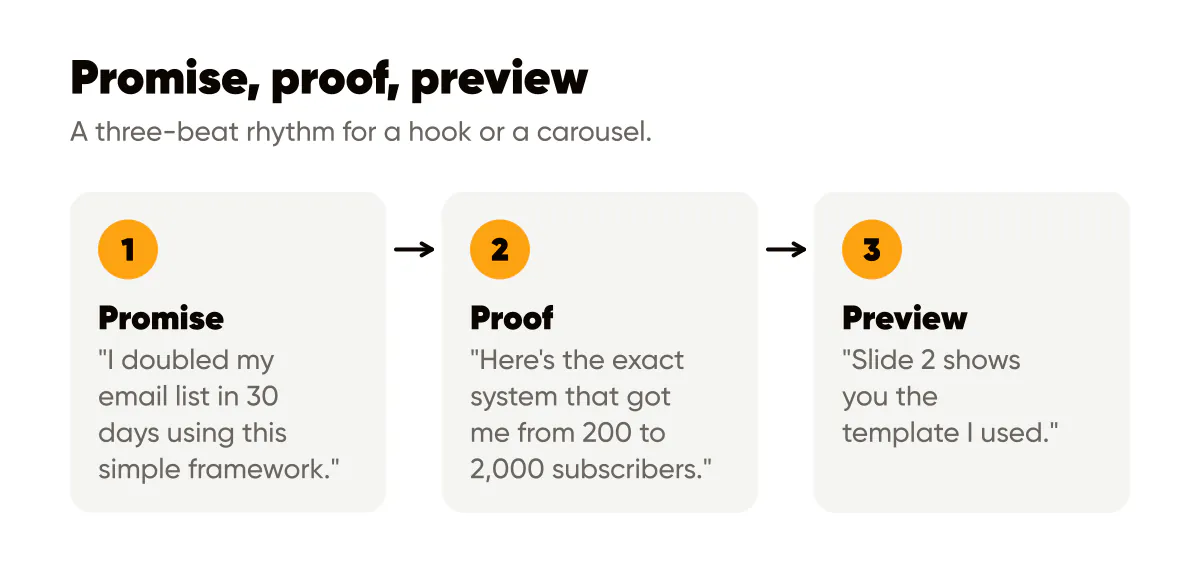
For carousel posts, use this structure across slides, pairing well with the caption frameworks built for the same mobile attention spans. Slide 1: Promise + hook. Slides 2-4: Proof points with specific numbers or testimonials. Final slide: Preview of what they'll learn + CTA. This structure works because it respects the viewer's time while delivering value at each step. They know what they're getting, why they should trust you, and what comes next.
The question hook that converts
Questions work when they're specific and create a knowledge gap. "What's the one mistake 90% of creators make?" beats "Want to grow faster?" because it promises a specific answer. The best question hooks make people think "I need to know this" rather than "I wonder what they'll say."
Frame questions around pain points your audience experiences but hasn't articulated. "Why do your best posts get ignored?" hits harder than "Want more engagement?" because it acknowledges a specific frustration. Turn these questions into bold, visually striking graphics that demand attention.
Ship hooks as templates
Save your winning openers as reusable formats. Rotate colors for each series so followers recognize the format before they even read the headline. When you find a hook structure that works, don't reinvent it. Systematize it.
Create a library of proven hook formulas: contrast hooks, question hooks, story hooks, number hooks, the same system behind good product launch hooks. Give each one a fixed look, with the same typography, spacing, and color scheme every time it appears. When you want to create a new post, pick a formula and write new copy for it. This speeds up production while maintaining quality.
Track which hook types perform best for your audience. Maybe contrast hooks get more saves, while question hooks drive more comments. Use this data to guide your template selection. Over time, you'll build a collection of high-performing formats that you can deploy confidently, knowing they'll resonate with your audience.
Test and refine systematically
Don't just post hooks randomly. Test them systematically. Post three variations of the same idea with different hooks and compare performance. Track saves, comments, shares, and click-through rates, using the same testing discipline from measuring creative performance. The hook that drives the most saves might be different from the one that drives the most clicks.
Keep a spreadsheet of hook formulas, their performance metrics, and the contexts where they worked best. This becomes your playbook for future content. When you're stuck, reference your hook library and pick a proven formula. Consistency in testing leads to consistency in results.

Put it into practice
Turn this into posts designed for your feed
Paste your website. Creobee reads what you sell, then plans, writes and designs your posts about it as one feed in your logo and colors, captions included, and on Autopilot it posts them for you.
How the AI Instagram post generator works