Instagram Bio Optimization for Solopreneurs: 150 Characters That Convert
Instagram bio optimization in 150 characters: a four-line bio for one-person businesses (name, who you help, proof, one CTA) and three before-and-after fixes.
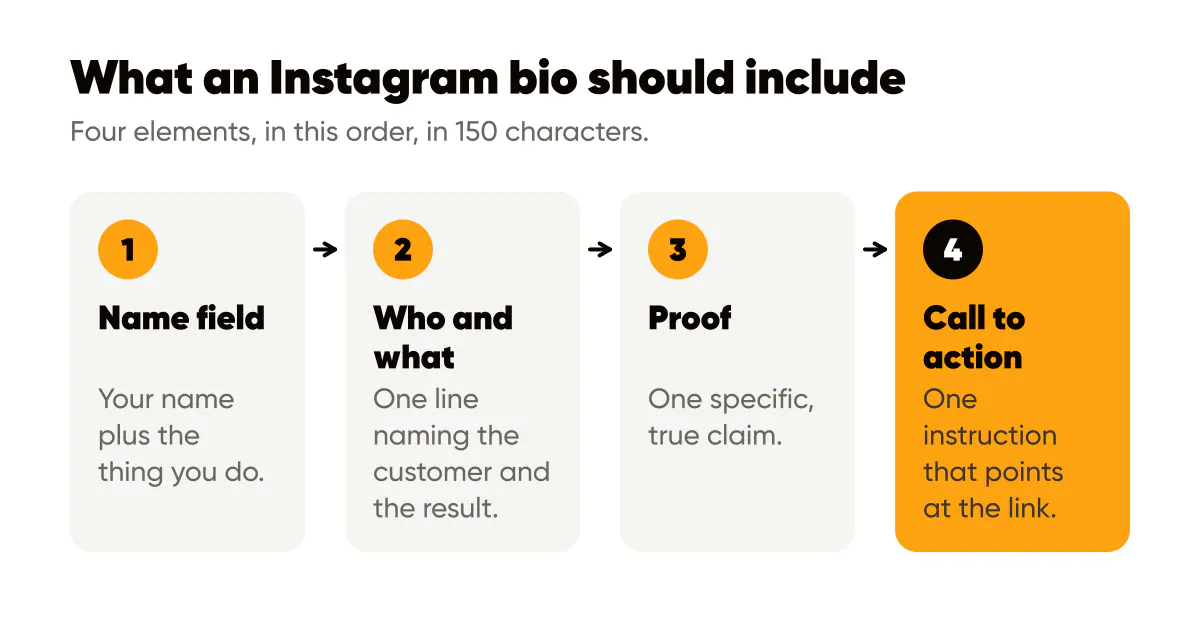
An Instagram bio converts when it does four jobs in 150 characters: a name field that includes what you do, a line naming who you help and how, one piece of proof, and one call to action pointing at the link. Everything else, hobbies, emoji rows, inspirational quotes, is taking space from a sale.
Why the bio is your highest-traffic landing page
Every post that works sends people to the same place. Someone sees a 4:5 graphic in the feed, taps your name, and lands on a screen with your picture, your name, roughly 150 characters, a link, and a row of highlights. They decide in a few seconds whether to follow, tap the link, or leave. I have watched this on Creobee's account: profile visits are the step between a good post and a signup, and the bio is the only copy on that step.
Most solopreneur bios fail the same way. They describe the person instead of the outcome. "Coffee lover. Dog mom. Designer." tells a visitor nothing about whether you can solve their problem. The fix is structural, not clever.
What should an Instagram bio include?
Four elements, in this order. I think of them as lines, even though Instagram wraps text however it likes.
- Name field: your name plus the thing you do, because the name field is searchable and the handle often is not descriptive. "Maya, Brand Designer" is found by people searching "brand designer"; "maya.creates" is not.
- Who and what: one line naming the customer and the result. "Logos and templates for food brands that want to look expensive."
- Proof: one specific, true claim. A number of clients, years, a recognizable client, a location, a credential. "120 food brands since 2019."
- Call to action: one instruction that points at the link. "Free brand checklist below."
That is the whole bio. If you have characters left, add a location or a second proof point. Do not add a fifth idea.
How do I use the name field for search?
Instagram search matches the name field, so the words there decide which searches you appear in. Keep your real name for recognition and add the two or three words a stranger would type when looking for what you sell. The Instagram Help Center covers how to edit your profile and what the name field allows; the strategy side, including how keywords in captions and bios get indexed, is in Instagram SEO: keywords in captions and bios.
A caution from my own mistakes: I once stuffed the name field with "AI Instagram Post Generator Tool" and it read like spam. People follow people. "Kutay, builds Creobee" plus a bio that explains the product converts better than a keyword string with no human in it.
Three rewrites, before and after
These are hypothetical accounts, written to show the structure. The proof lines are invented for the example; yours must be true.
A business coach. Before: "Helping you live your best life. Mindset. Growth. Abundance. DM me." After, name field "Dana, Coach for Freelancers"; bio: "I help freelancers go from feast-or-famine to booked 3 months out. Coached 200+ solo consultants. Free pricing guide below." Every phrase is a customer's words, and the proof is checkable.
A bakery. Before: "Baked with love in Portland. Open Tue to Sun." After, name field "Elm Street Bakery, Sourdough, Portland"; bio: "Naturally leavened sourdough and croissants, baked at 5am on Elm Street. Sells out by 9. Preorder for pickup below." The hours moved to highlights; the CTA does the selling.
A freelance designer. Before: "Designer. Coffee. Travel. Available for work." After, name field "Sam, Web Designer for Coaches"; bio: "Websites that book discovery calls for coaches and consultants. 40 launched since 2022. See 3 recent sites below." The visitor knows whether it is for them within one line.
Notice that none of the rewrites is more clever than the original. They are more specific. If you want the underlying copywriting rules, Copyblogger's Copywriting 101 covers benefit-first, reader-first writing better than I can in a paragraph.
The link and the highlights finish the job
The bio's CTA points at the link, so the link has to match the promise. If the bio says "free pricing guide below," the link goes to the guide, not to a homepage. When you change what you are promoting, change the line and the link together. The decisions around one link versus a link page, and how to track clicks, are in link in bio strategy.
Highlights are the second screen of your landing page. Treat them as tabs: Start Here, Results, Offers, About. Give them covers in your brand colors so they read as one system with your grid. If your posts come from an AI Instagram post generator that designs in your brand colors, use the same colors here. A visitor who is not ready to tap the link can tap a highlight and warm up. For a lot of small businesses the bio link feeds an email list, and converting social followers to email subscribers explains why that is often the better first ask than a purchase.
Should a solopreneur use a business or creator account?
Yes to one of the two, because Insights, the contact buttons and the category label are only available on professional accounts. Instagram for Business explains the switch. The category label under your name, such as "Bakery" or "Marketing Consultant," supports the name field, so pick the accurate one rather than leaving it blank or choosing something cute.
Do this this week
Open your profile on your phone and read the bio as a stranger who saw one post. Can they say in one sentence who you help and what happens if they tap the link? If not, rewrite it with the four-line structure: name field with a keyword, who and what, one true proof, one CTA. Then check that the link delivers exactly what the CTA promised. Screenshot the old bio first; in a month, compare profile visits to link taps in Insights and keep whichever version wins. If your proof line feels thin, the social proof posts guide shows how to collect claims you can actually stand behind.
Put it into practice
Turn this into posts designed for your feed
Paste your website or say what you do. Creobee plans, writes and designs your posts about it as one feed in your logo and colors, captions included, and on Autopilot it posts them for you.
How the AI Instagram post generator works