Blog vs Social Media: Where Content Should Live
Blog vs social media for a one-person business: which topics deserve a blog post, how hub and spoke works, what zero-click changes, and a weekly rhythm.
The canonical version of anything worth keeping should live on your blog, because you own the URL, search engines can find it, and it does not vanish in a feed. Social is where you rent distribution for it. Post-only content is fine for observations and moments; anything you would want found in a year gets a page first.
Own the canonical version, rent the distribution
Every platform you post on can change its ranking, its format, or its terms tomorrow, and you will read about it on the same day as everyone else. Your blog cannot do that to you. A page on your own domain has a URL you control, a design you control, and an audience path (search, email, links) that does not depend on a feed's mood.
That is the asymmetry that decides the question for me. Social is superb at distribution and terrible at permanence. A blog is superb at permanence and, for a solopreneur without an audience, poor at distribution. So the answer is not "blog or social." It is "blog for the version that has to last, social for the version that has to travel," with the social version always pointing home.
I run Creobee's blog this way. Every post here is the canonical version of an idea. Instagram, LinkedIn and Pinterest get shorter versions that carry the headline and link back. When a platform has a bad month, the pages keep working.
Which topics deserve a blog post and which stay social-only?
Ask two questions of every idea: will someone search for this, and will it still be true in a year? Two yeses means it gets a blog post. One yes means a blog post if you have time, a social post if not. Two nos means it is social-only, and that is fine.
- Blog first: how-tos, reference material, comparisons, pricing explainers, FAQs, anything with a keyword phrase a stranger would type.
- Social only: observations from the week, behind-the-scenes moments, reactions to news, quick wins, questions to your audience.
- Both, with the blog as the source: frameworks, checklists, opinions you will keep repeating.
The test I actually use: if I would be annoyed to explain it a third time in DMs, it becomes a page. Then the fourth time, I send the link.
The hub and spoke model
Hub and spoke is the oldest content model there is and it still works: one long piece at the center, many short pieces radiating out, each one linking back. For a solopreneur it is also the least wasteful, because the expensive thinking happens once.
Here is how a single hub becomes a week of spokes. Write the blog post (the hub). Pull the headline as a 4:5 text post. Pull three key points as three more text posts. Turn the steps into a carousel. Put the strongest sentence on a quote card. End the week with a CTA post that sends people to the link. That is seven social posts from one page, and the exact extraction is in how to turn one blog post into a week of Instagram content.
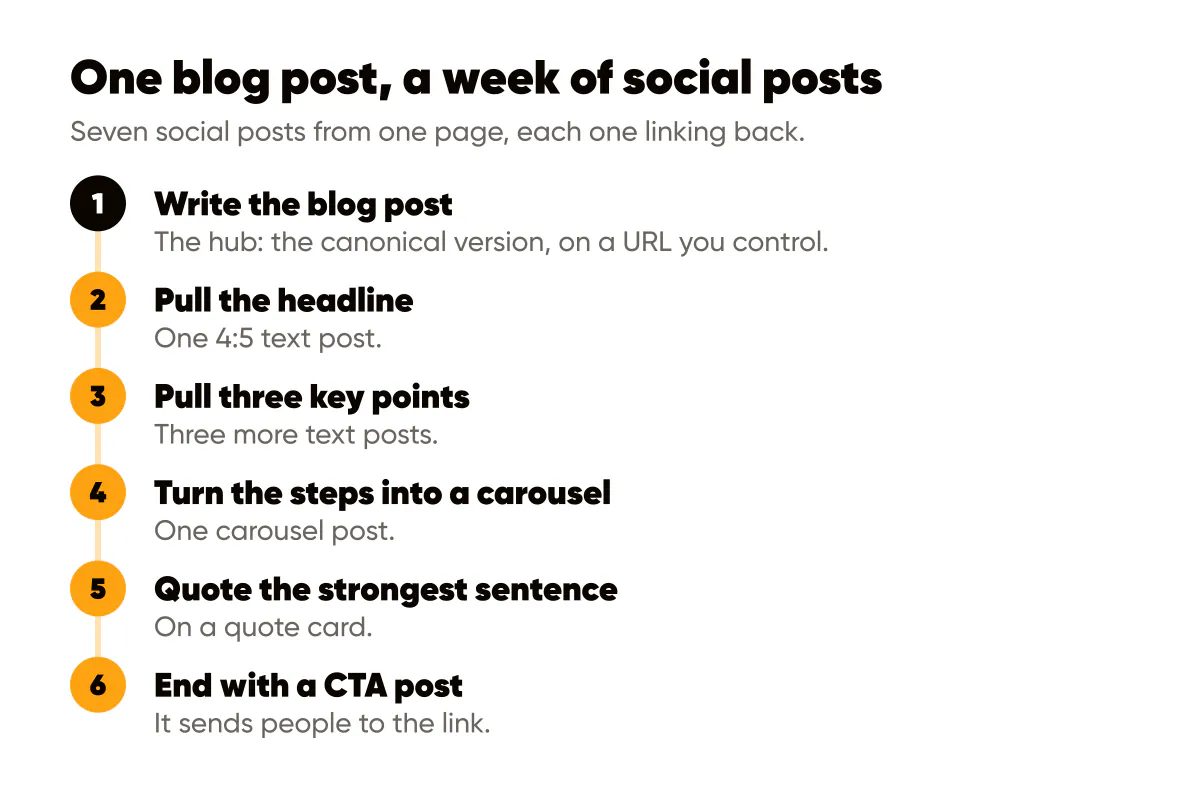
The spokes do more than distribute. They are a test. If the headline post gets saved and the key-point posts get comments, the hub topic is a winner and I go back and expand the page. If they all flop, I learned that from seven cheap posts instead of from silence on a page nobody found.
Should the blog post or the social post come first?
For anything searchable, the blog post comes first, because you need a URL to point at. For anything you are not sure about, reverse it: post the idea on social this week, watch the response, and write the page only for the ideas that earn it. Several of my blog posts started as a text post that got more saves than I expected. The social version was the draft; the page is the final. Both directions are legitimate; the mistake is writing the long version for every idea.
How zero-click and AI answers change the math
Here is the honest part. Search does not send as many clicks as it used to, and pretending otherwise is bad strategy. SparkToro's 2024 zero-click search study found that for every 1,000 US Google searches, about 360 clicks reached the open web; the rest ended on Google's own properties or without a click at all. Google's own documentation on AI features and your website describes how AI Overviews and AI Mode summarize answers and link to sources, which is a different traffic shape from ten blue links.
Does that mean the blog loses? No, but it changes what the blog is for. Three things follow.
First, the page is increasingly the source that gets cited and summarized, not the destination that gets clicked. That still favors having the canonical version on your domain, because a summary of your framework with your name attached is distribution too, and it only happens if the page exists. I covered how to write for that in zero-click content strategy.
Second, the social post has to carry more of the value on its own. If most people will not click through, the 4:5 post cannot be a teaser; it has to deliver the point and let the link be optional. This actually improves the posts.
Third, the blog earns its keep through the channels that still click: your own email list, your link in bio, your other posts, and the people who saw the idea on social and searched for you by name. Brand search is the click zero-click cannot take away. Being the name people search for is the whole game in content marketing standards in 2026.
Is a blog still worth it for a one-person business?
Yes, if you treat it as the library and not the funnel. Twenty good pages that answer the twenty questions your customers ask, each linked from the relevant social posts and each pointing to what you sell, will outlast any feed. Expecting those pages to rank cold and flood you with strangers is the part to let go of.
A weekly rhythm that respects both
Here is the split I keep. One blog post every week or two, on a topic that passed the two-question test. Every post gets its seven spokes over the following week. In between, two or three social-only posts from the week's observations, no page needed. Once a quarter, I look at which pages got any search traffic or any link clicks from social, and expand the top three. If finding days and times for all of it is the hard part, a posting schedule built around your pace sets them for the week.
That gives the blog a steady supply of durable pages, gives social a steady supply of posts I did not have to think up from nothing, and keeps the canonical version of every good idea somewhere I own. Images matter to both sides of this: the same branded graphic that leads the social post should sit at the top of the blog post as its cover and its link preview, which is the subject of image SEO for blog and social graphics.
Do this this week
Write down the last ten things you explained to a customer. Run each through the two questions (searchable, true in a year). For the ones with two yeses, check whether you already have a page; if not, pick one and write it this week, then cut seven spokes from it for next week. For the rest, post them as they are. The routine for cutting a page into posts is the same each time, so after the first round it stops feeling like extra work and starts feeling like the way you publish.
Put it into practice
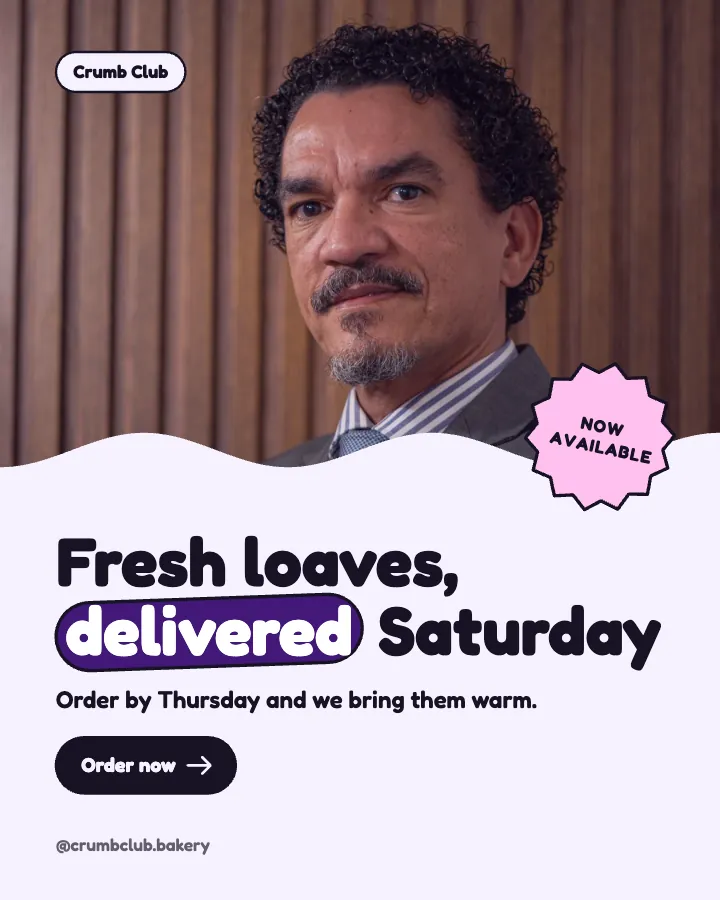
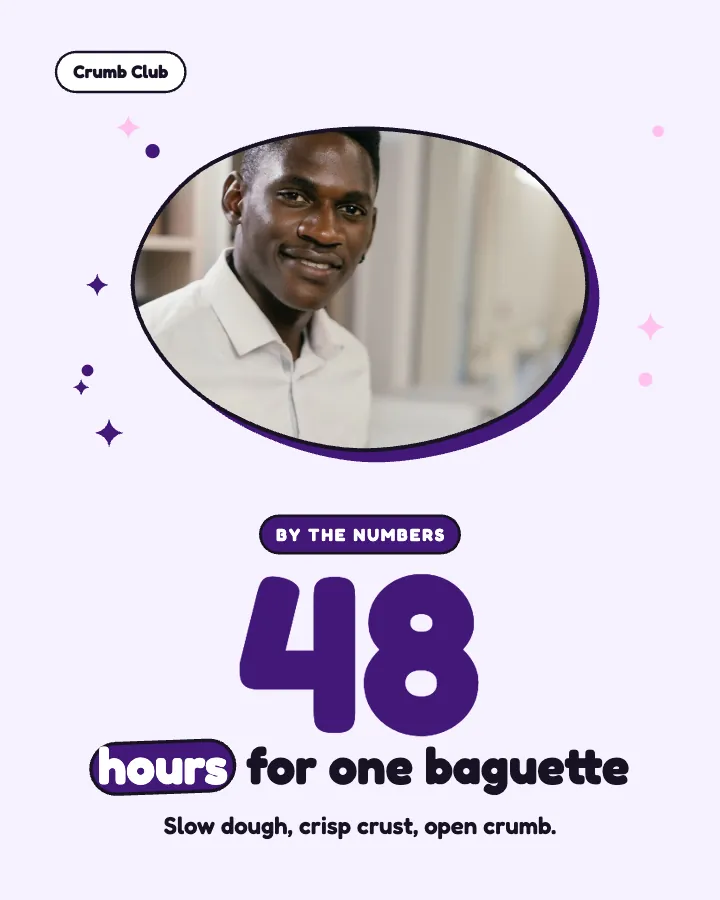
Turn this into posts designed for your feed
Paste your website or say what you do. Creobee plans, writes and designs your posts about it as one feed in your logo and colors, captions included, and on Autopilot it posts them for you.
How the AI social media post generator works