Turn Customer Questions Into a Month of Posts
Turn customer questions into posts: collect them from DMs, emails, calls and reviews, group them into themes, answer one per post. 30 starter questions inside.
Customer questions are the highest-quality content ideas you will ever get, because a real person with money already asked them. Collect them from DMs, emails, calls and reviews, group them into four or five themes, and answer one per 4:5 post: the short answer on the image, the full answer in the caption. Thirty questions is a month of posts.
Why questions beat brainstormed ideas
Brainstormed ideas are guesses about what your audience wants. Questions are evidence. When a prospect asks "do you charge for the site visit", they are telling you what stands between them and buying, in their own words. Answering that question publicly answers it for everyone who did not ask, and it uses the exact vocabulary the next prospect will type into a search box.
That last part matters more every year. Instagram search reads captions and alt text, and Google's documentation on AI features in Search describes how AI Overviews and AI Mode draw on web content to answer conversational, question-shaped queries. A post whose headline is the question people actually ask, phrased the way they ask it, is aligned with how both kinds of discovery work. The AI search optimization guide goes deeper on writing for answer engines.
Where the questions are hiding
You already have thirty questions; they are scattered across places you never think of as research.
- Direct messages and comments, especially the ones you answered in a hurry and forgot.
- Email threads with prospects, where the questions before the yes are the most valuable.
- Discovery calls and quotes: write down every question the moment the call ends.
- Reviews of your business and of competitors, where complaints are questions nobody answered in time.
- Search suggestions when you type your service into Google or Instagram search, which show what strangers ask.
I keep a single note called Questions and add to it in the moment. Trying to remember them at the end of the month recovers about a third of them. In the moment recovers nearly all.
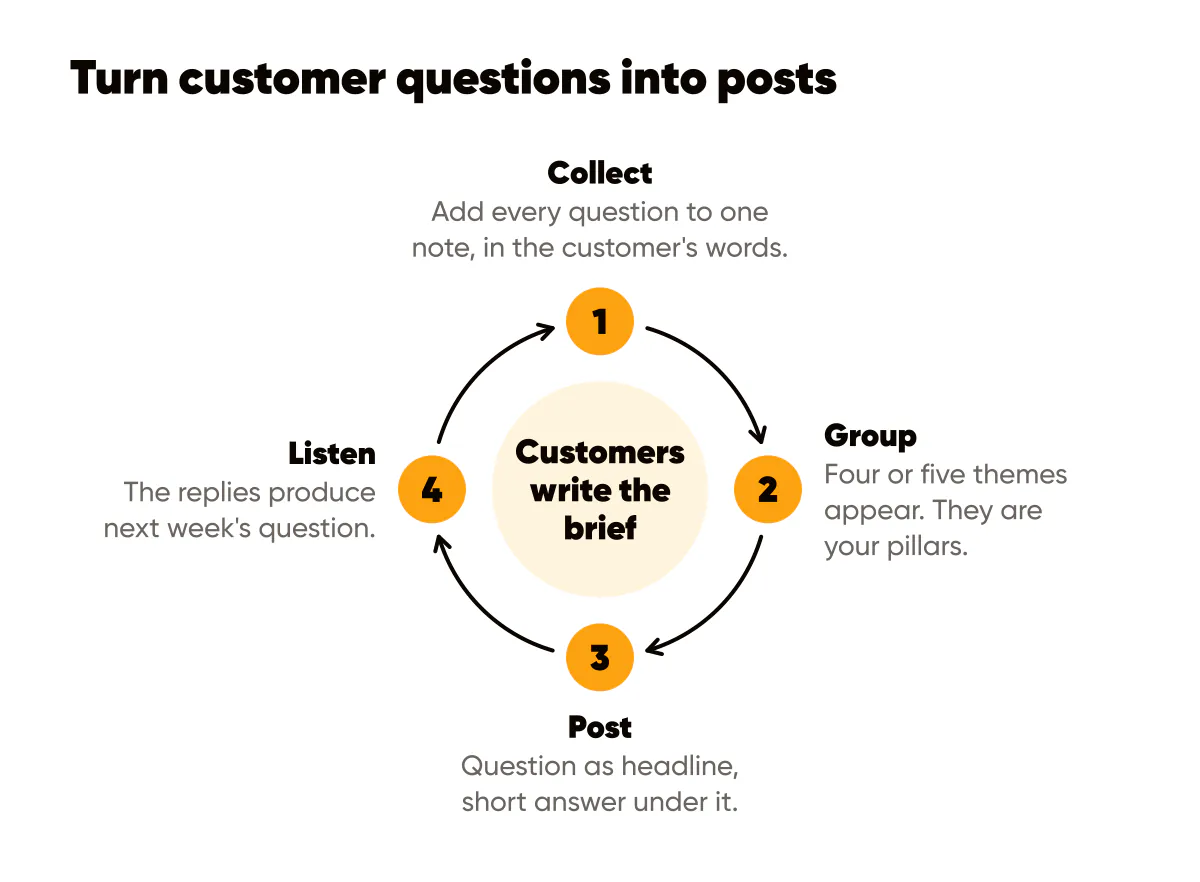
How do you turn a customer question into a post?
Four moves. Rewrite the question in the customer's words, not yours; "Is the excess the same as the premium?" rather than "Understanding policy excess". Answer in one sentence for the image, two to eight words if you can manage it. Write the full answer in the caption, with one real detail from a job or client (anonymized). End with one call to action that fits the question: save this, reply with your situation, or book a call.
Then group. Once you have thirty questions, four or five themes appear on their own: cost, process, timing, risk, and "is this normal". The themes become your content pillars, and posting one question from each theme per week keeps the feed varied without any planning.
Design: the question on the image, the answer in the caption
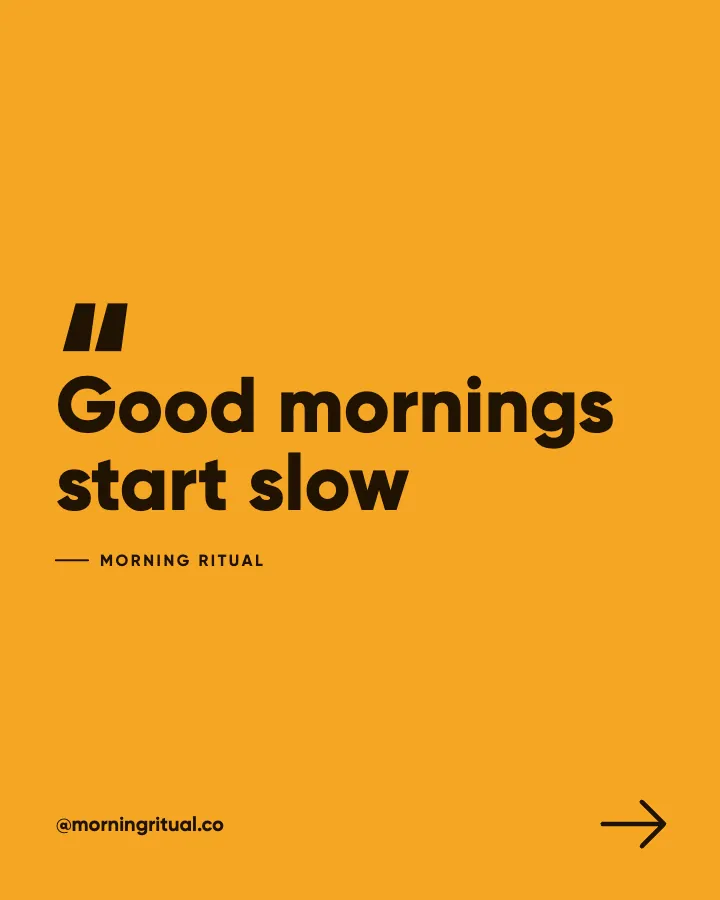
The format that works for me is the question as the headline on a branded 4:5 post, sometimes with the one-sentence answer beneath it in smaller type, and the full explanation in the caption. The question is what stops the scroll, because the reader recognizes their own problem. The caption carries the detail, the receipt and the CTA.
Keep the template identical across the series so the grid reads as one body of work: same background family, same font, logo in the same corner. Because the questions are short, they fit well in the compact word counts a phone screen rewards. A batch of thirty in one template family takes an hour in a composer such as an AI Instagram post generator, and the result looks like a deliberate FAQ series rather than thirty unrelated posts.
Put the question and answer in the alt text and the caption too, not only on the image. Platforms cannot read text baked into pixels, and the Instagram SEO post explains which fields search actually indexes. For search across the wider web, Google's people-first content guidance asks whether content answers the question a visitor came with; a post built from a literal customer question is about as direct an answer as exists.
What if you do not have enough customer questions yet?
Borrow the shape and fill it with what you know they will ask. New businesses can use the template list below, then replace items with real questions as they arrive. Competitor reviews are also fair game for finding questions; reading what customers complain about in your category tells you what nobody explained to them. Within a month of collecting deliberately, the borrowed list will be mostly real.
A 30-question template list
Adapt the wording to your trade. Each is written as the customer would ask it.
- How much does this usually cost?
- What makes the price go up or down?
- Do you charge for a quote or a first visit?
- What is included, and what is extra?
- How long does it take from yes to done?
- What do I need to prepare before you start?
- What happens on the first day?
- Do I need to be there while you work?
- What if something goes wrong afterwards?
- Is this covered by a warranty or guarantee?
- Are you insured, and what does that cover for me?
- Can I do this myself instead?
- What is the most common mistake people make with this?
- How do I know if I actually need this?
- What is the difference between option A and option B?
- Which one do you recommend for someone like me?
- Is now a good time, or should I wait?
- What time of year is best for this?
- How often does this need doing again?
- What do you need from me to give an accurate quote?
- Why is your quote different from the one I got online?
- Do you work with small jobs or only big ones?
- Do you work in my area?
- Can I see examples of work like mine?
- What does the paperwork or contract actually say?
- How do I pay, and when?
- What do most of your clients regret not asking?
- What would you do if it were your house, business or money?
- What is the one thing you wish every customer knew before calling?
- What questions should I ask any provider before hiring them?
Thirty posts from thirty questions, one theme per weekday, is a complete month with room for a couple of moment-driven posts on top. The service business idea list and the boring industries post have more angles if your niche is more specialized than this list allows.
A worked example: a small accounting practice
The bookkeeper collects eleven questions from March: three about deadlines, four about what counts as an expense, two about whether to become a limited company, two about fees. She groups them into deadlines, expenses, structure and fees, and writes the short answer for each on a cream-and-navy template. "Can I claim my home office?" becomes the headline; "Yes, if you meet two tests, and most sole traders get one of them wrong" is the answer under it; the caption explains both tests in plain language and ends with "reply with your setup and I will tell you which test applies". Eleven posts, one afternoon, and every one of them is a query someone will type into a search box this month. More examples of a feed like hers are on the page for social media posts for accountants and bookkeepers.
Do this this week
- Start a Questions note and add every question you are asked for seven days, in the customer's words.
- Go back through the last month of DMs and emails and pull out ten more.
- Group them into themes; the themes are your pillars.
- Make five posts: question as headline, short answer under it, full answer and one CTA in the caption, question repeated in the alt text.
- Post one, then note which new question the replies produce. That is next week's post.
You do not need to invent content when your customers are writing the brief for you every day. You just need somewhere to write the questions down.

Put it into practice
Turn this into posts designed for your feed
Paste your website or say what you do. Creobee plans, writes and designs your posts about it as one feed in your logo and colors, captions included, and on Autopilot it posts them for you.
How the AI content calendar generator works