Is Threads Worth It for Business in 2026?
Is Threads worth it for a one-person business? Who benefits, who should skip it, and a 15-minute weekly routine that reuses what you already post.
Threads is worth posting on if you already write short opinions for Instagram or LinkedIn and can reuse them at near-zero cost. It is not worth a separate content plan. The solopreneurs who benefit are the ones whose business runs on ideas and conversation. Product-first brands that rely on visuals should treat it as optional.
What Threads actually is for a one-person business
Threads is Meta's text-first app, tied to your Instagram account. You log in with your Instagram identity, your handle carries over, and the feed is built around short text posts with optional images and links. The Threads Help Center documents the current mechanics, including how posting and sharing between the two apps works, and I would check it rather than trust a screenshot from last year, because Meta changes the details often.
For a solopreneur the important trait is cost. A Threads post is a sentence or two. There is no canvas to design, no video to edit, and no pressure to look polished. That makes it the cheapest place to test whether an idea lands before you spend an hour turning it into a carousel.
The trade-off is that low cost applies to everyone. Text is easy to produce, so the feed is dense with it, and a bland opinion disappears faster than a bland image does. Threads rewards people who already have a point of view. It does not manufacture one.
Who should post on Threads?
The clearest fit is the solopreneur whose product is thinking: coaches, consultants, freelance writers and designers, developers selling their own tools, anyone who would otherwise post on LinkedIn. If you already run the kind of opinion-led account described in LinkedIn thought leadership for founders, Threads is a second outlet for the same raw material with a different crowd.
The weaker fit is a product or local business whose posts are mostly visual: a bakery, a boutique, a photographer. You can still post there, and attaching your branded image to a text post works fine. But the reason people follow you is the image, and Instagram already serves that better. I would not add Threads to a bakery's weekly routine until Instagram is running without friction.
What I have seen on my own account
I post for Creobee on Threads with a simple rule: nothing goes there that was written only for Threads. Every post is either a caption hook I already wrote, a sentence lifted from a blog post, or a reply to someone else's post. The account is small, so I will not pretend I have data worth generalizing. What I can say is that replies have consistently done more for me than original posts. A useful reply under a bigger account's question has brought more profile visits than any standalone opinion I have published.
The other observation is about tone. Posts that read like a person thinking out loud get responses. Posts that read like a caption, with a call to action and a tidy structure, get ignored. Threads punishes the polished voice that Instagram tolerates.
Is Threads better than Instagram for reach?
Nobody outside Meta knows the ranking details well enough to answer that, and I would be suspicious of anyone who claims to. What I can say is that the two apps have different jobs. Instagram is where your branded 4:5 posts live permanently and get found through search and the grid. Threads is a conversation layer. Judging one by the other's metrics misses the point.
If you want a sense of where audiences actually spend time across platforms, the Pew Research Center's social media fact sheet tracks US adoption by platform and demographic and is a better guide than any single creator's anecdote, including mine.
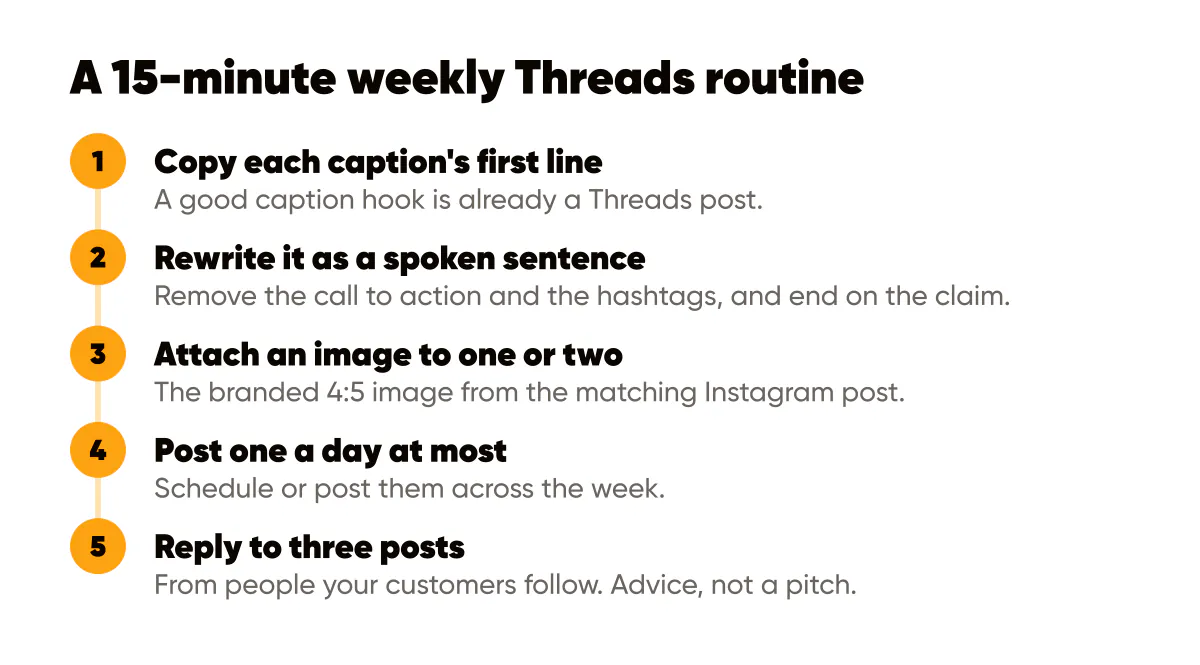
A 15-minute weekly Threads routine
Here is the routine I run, timed so it fits inside the weekly planning block I already keep for everything else.
- Open the captions you wrote for this week's Instagram posts and copy the first line of each one. A good caption hook is already a Threads post.
- Rewrite each hook as a spoken sentence. Remove the call to action, remove the hashtags, and let it end on the claim.
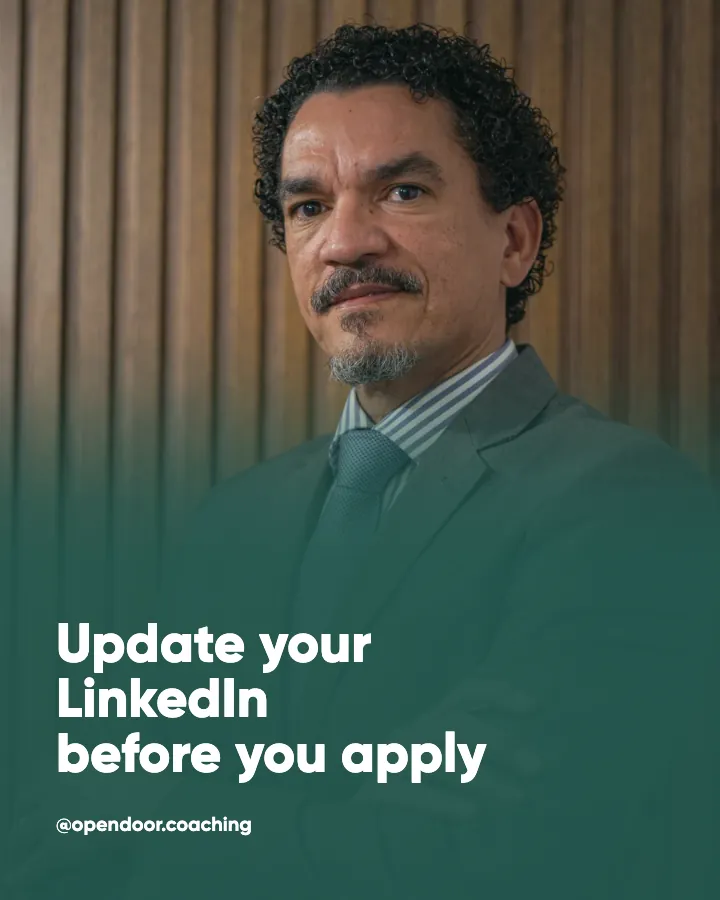
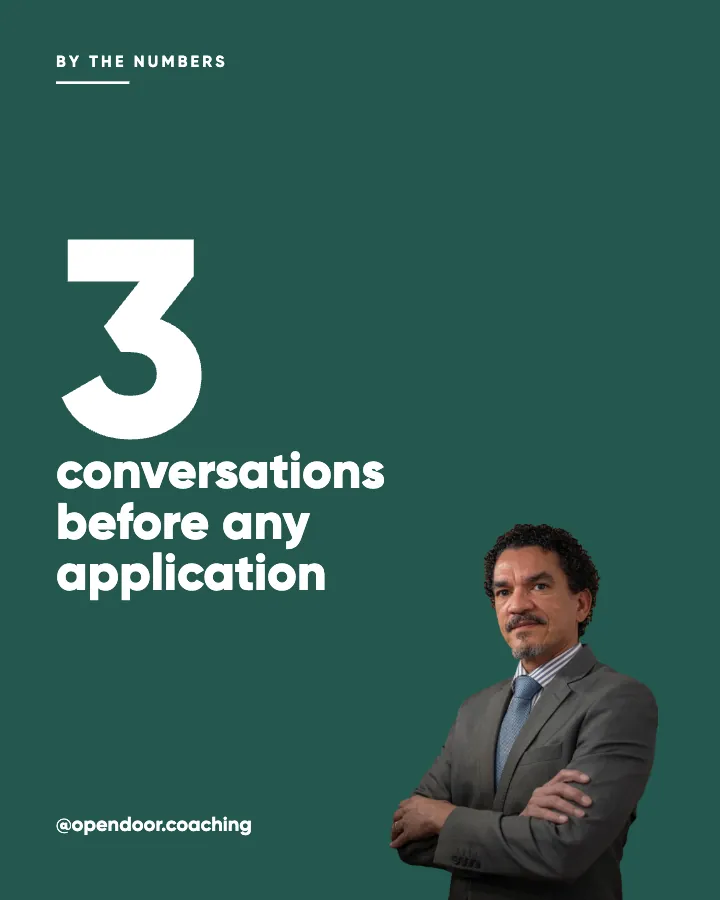
- Attach the branded 4:5 image from the matching Instagram post to one or two of them, not all. The image turns a sentence into a recognizable brand touchpoint without extra work.
- Schedule or post them across the week, one a day at most.
- Spend the remaining minutes replying to three posts from people your customers follow. Write the reply as advice, not as a pitch.
That is the whole system. The hooks come from the caption work you already did, so the marginal cost is the rewrite. The content repurpose playbook covers the broader version of this idea, turning one piece of thinking into eight assets, and Threads is simply asset number nine.
Should you attach images to Threads posts?
Sometimes. A text-only post reads as conversation, which is what the app is built for. An image reads as a broadcast. My split is roughly one image post for every three or four text posts, and the image is always one my AI Instagram post generator already made for Instagram, in the same template, so the two feeds look like the same brand. If you batch your Instagram visuals, this costs nothing; the image already exists. If you do not, the caption frameworks I use on Instagram will give you hooks worth posting even without a picture.
What I would skip
Do not build a separate Threads calendar. Do not write long threads of connected posts unless your audience clearly reads them. Do not treat follower count on Threads as a goal; a few dozen people who reply beat a few thousand who scroll. And do not post there at all if your Instagram cadence is still shaky. Fix the primary channel first. Threads is a cheap add-on, not a rescue plan.
Do this this week
Take the five caption hooks you already have for this week, rewrite each as one spoken sentence, and post one a day on Threads. Attach your branded image to one of them. Reply to three posts a day from accounts your customers follow. After two weeks, look at profile visits and replies, not likes, and decide whether the fifteen minutes earned their place.
If your week does not yet have a fixed planning block to hang this on, the 90-minute weekly content planning routine is where I would start, with Threads as the last ten minutes of it.
Put it into practice
Turn this into posts designed for your feed
Paste your website or say what you do. Creobee plans, writes and designs your posts about it as one feed in your logo and colors, captions included, and on Autopilot it posts them for you.
How the AI Instagram post generator works