Content Ideas for Boring Industries: 20 Post Ideas
Content ideas for boring industries like accounting, plumbing and insurance: five pillars, 20 post ideas and why plain text posts beat stock photos.
Boring industries are the easiest place to win at content, because almost nobody in them is trying and the people searching have a real problem right now. Accountants, plumbers, insurance brokers, electricians and pest controllers can build a feed from five pillars: myths, costs explained, seasonal reminders, what to ask before hiring, and mistakes you fix. Plain branded text posts do the job.
Why boring is an advantage
When I look at the feeds of unglamorous local services, most are either empty or a wall of stock photos of handshakes. That is the competition. A bakery competes with thousands of beautiful accounts; a drainage contractor competes with two, and both are silent. The bar for standing out is low, and the reward is high because the person searching "why is my boiler making a banging noise" is not browsing for entertainment. They have a problem, money, and a deadline.
The other advantage is that boring services have endless questions attached to them. Every job you have done this year generated three questions a customer asked before, during or after. Those questions are your content. The customer questions method turns a month of them into a month of posts; this article gives you the pillars and a bank of ideas to start from.
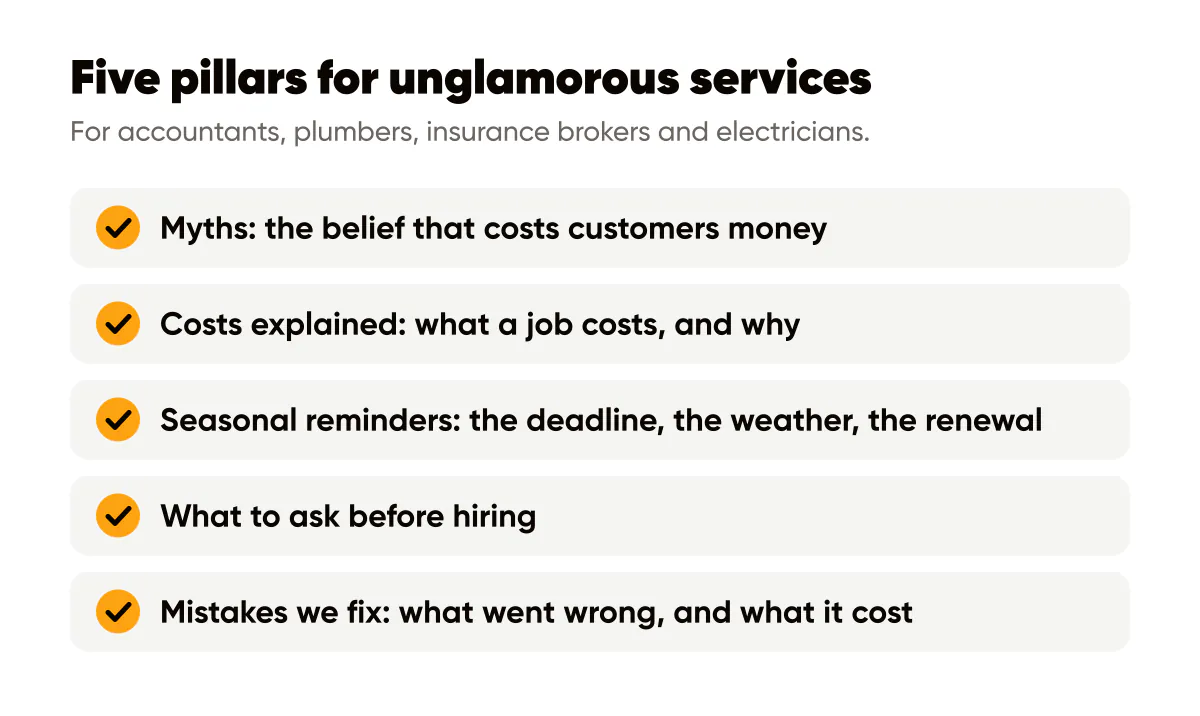
Five pillars for unglamorous services
Pillars keep you from staring at a blank calendar. These five fit almost any trade or professional service.
- Myths: the thing customers believe that costs them money. "You need an accountant only at tax time" or "a dripping tap is harmless".
- Costs explained: what a job costs, why, and what moves the price. Ranges are fine; context is what people want.
- Seasonal reminders: the deadline, the weather change, the renewal date. These write themselves once a year and can be reposted every year.
- What to ask before hiring: the questions a smart customer asks, which position you as the one who welcomes them.
- Mistakes we fix: anonymized stories of what went wrong before you arrived, and what it cost to put right.
The teaching-first approach underneath all five is covered in educational content that sells. The pattern is the same: teach something true, and let the offer follow.
Do boring businesses need photos to post on social media?
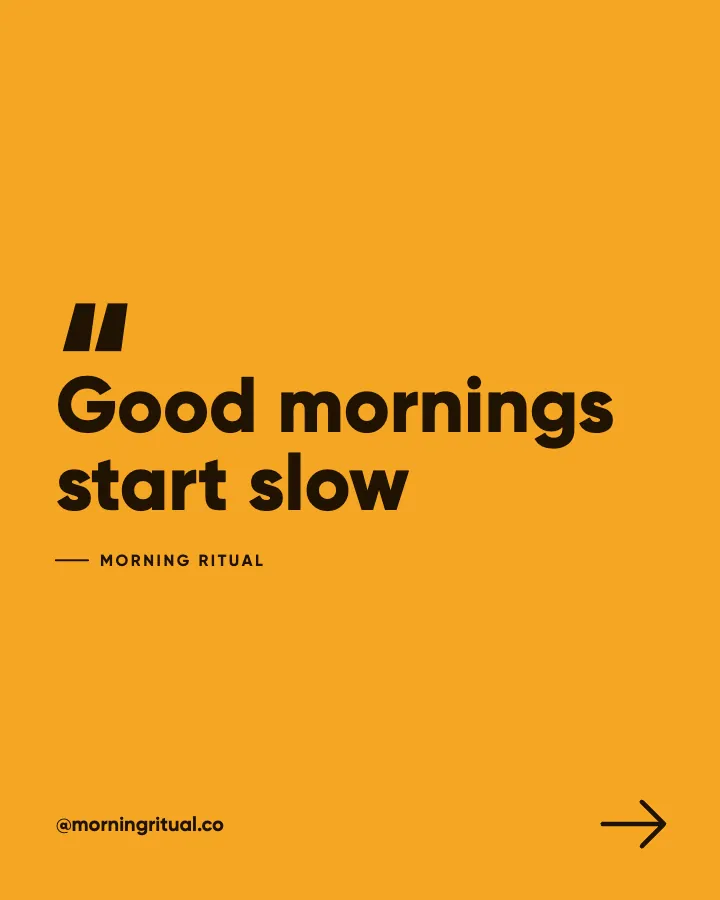
No, and I would argue photos are often the weaker choice here. A stock photo of a smiling plumber says nothing; a branded text post that says "Your boiler service is not optional if you rent out the property" says something specific, is readable at thumbnail size, and looks like it came from a business with its act together. Real job-site photos are useful occasionally, especially before-and-after pairs, but the base layer of a trades or professional feed can be text-led branded posts in your colors with your logo.
This is also the format that survives being reused. A text post about a tax deadline works on Instagram, LinkedIn, Facebook and your Google Business Profile, where Google's guidance on managing photos and videos makes clear that regular, relevant images are part of a healthy profile. The local business playbook explains how to run this in thirty minutes a week.
Twenty post ideas you can use this month
Pick five, put them in your template, write a short caption for each, and you have a week and a half of posting. Swap in your own numbers and terms.
- "Three signs you are about to have a drainage problem" (the early warnings only a professional notices).
- "What a boiler service actually includes" with the four or five checks listed.
- "The deduction most sole traders miss" with a plain explanation and a reminder to ask your own accountant.
- "Why your quote is higher than the one you got online" (site visit, materials, warranty, insurance).
- "The renewal date reminder": one sentence about the policy type and the date most people forget.
- "What we found behind the wall" (an anonymized mistakes-we-fix story with the cost).
- "Landlord or homeowner? The rule is different" for a common compliance question.
- "Five questions to ask any electrician before they start" with why each matters.
- "The cost of waiting": what a small repair becomes if ignored for six months, as a range.
- "Receipts: how long to keep them and where" for a bookkeeping audience.
- "Frost is coming, do this today" as a one-line seasonal reminder with your logo.
- "Insurance excess explained in one paragraph".
- "What a callout fee covers and why it exists".
- "The myth about hard water" or whichever myth is local to you.
- "How to read your bill" with the three lines that matter.
- "A day in the diary": how many jobs, how many miles, what the day cost in fuel.
- "The tool we replaced this year" and why (trust through specificity).
- "Before you sign a contract, check these three clauses".
- "Why we do not quote over the phone" as an opinion post.
- "The question we got asked most in July" answered in two sentences.
If you run an accounting or bookkeeping practice, social media posts for accountants is your version of this list, with real designed posts from a bookkeeping firm's feed.
Notice that every item is a specific statement, not a topic. "Boiler tips" is a topic. "What a boiler service actually includes" is a post. The specificity is what makes the person with the problem stop scrolling, and it is what Google's people-first content guidance is describing when it asks whether content shows first-hand expertise rather than a summary of what everyone else says.
How do you make a text post about tax or drains look good?
Keep it short and keep it consistent. Two to eight words on the image in your brand color and your one font, the logo in the same corner every time, and a background that stays in one family across the month. The image carries the claim ("Your excess is not your premium"); the caption carries the explanation. For a service business, a calm, readable template beats a decorative one, because the reader is looking for competence, not creativity. Batch-generating twenty of these in one template family is faster than making one good photo post, and it gives the grid an automatic uniformity that signals a business that shows up. The 60 ideas for service businesses has more if you run out.
A worked week for a plumber
Monday: myth post, "A dripping tap wastes more than water" with the reason. Wednesday: costs explained, "What moves the price of a bathroom refit" with the three factors. Friday: seasonal reminder, "Outside taps: isolate them before the first frost". Two Stories in between showing a job in progress, no polish. Total production time in a template tool: under an hour for the week, including captions. That cadence held for six months is more than most local trades will ever do, and it compounds because every post is evergreen enough to repost next year.
Do this this week
- Write down the last ten questions customers asked you. Each one is a post.
- Choose two pillars from the five and pick three ideas from the list above that fit.
- Make three branded text posts in one template: short claim on the image, explanation in the caption.
- Post one, put the same image on your Google Business Profile, and note any reply or DM it produces.
- When nothing is happening in the business, come back to the list; what to post when nothing is happening has ten more post types that need no news.
Boring is not a limitation. It is a market where showing up plainly and regularly is enough to be the obvious choice, and very few of your competitors know it.

Put it into practice
Turn this into posts designed for your feed
Paste your website or say what you do. Creobee plans, writes and designs your posts about it as one feed in your logo and colors, captions included, and on Autopilot it posts them for you.
How the AI content calendar generator works