Instagram Stories vs Feed Posts for Small Business
Instagram Stories vs feed posts: feed posts bring discovery and last, Stories turn followers into buyers. A weekly split for a small business and a reuse trick.
Feed posts are for discovery and permanence: they reach non-followers, get saved, show up in search and sit on your profile. Stories are for the people who already follow you: quick, disposable, conversational, and where warm followers become customers. A small business should build its week around three feed posts and use Stories daily to keep them warm.
Two surfaces, two jobs
Instagram ranks each surface with its own system, which its ranking explainer spells out: Feed mixes posts from accounts you follow with recommendations, while Stories shows only accounts you follow, ordered by how close the system thinks you are. That single design fact decides the strategy. A feed post can find a stranger. A Story almost never does.
So the feed is your front door. It is where a new person discovers you through Explore, a share, a search, or a friend's Story. It is also permanent: a good feed post keeps earning saves and profile visits for months. Stories are the kitchen. Only people already inside see them, they disappear in a day, and they are where the conversation and the sale actually happen.
On the Creobee account, nearly every new follower arrives through a feed post, and nearly every reply, question and signup that I can trace comes through a Story or a DM that a Story started. I do not think that pattern is unusual.
Are Instagram Stories or feed posts better for a small business?
Neither, and the question hides a mistake: treating them as competitors for the same slot. They are stages in one funnel. Feed posts fill the room; Stories work the room. A business that only posts to the feed builds an audience it never talks to. A business that only posts Stories talks constantly to a room that never grows.
If you are forced to choose because time is brutal, choose the feed, because discovery compounds and Stories do not. But the honest answer for a one-person business is a small amount of both, with a strict cap on each so neither eats the week.
A weekly split for a one-person business
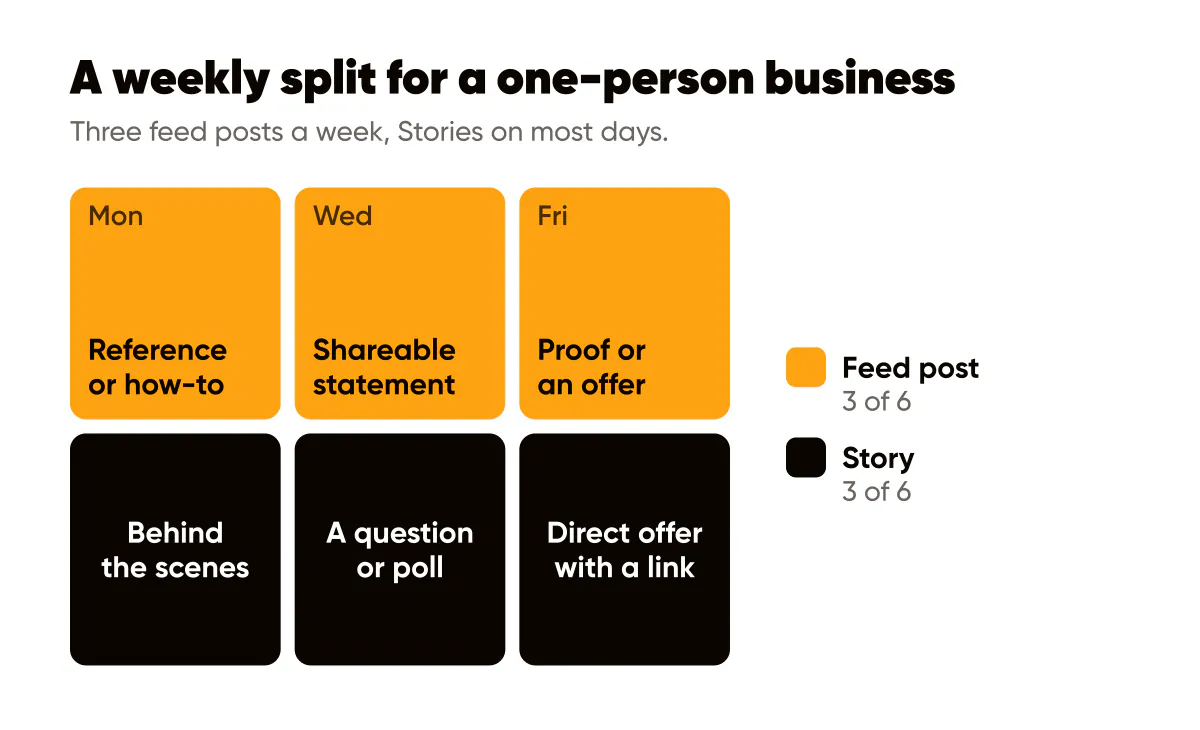
Here is the split I recommend and roughly run myself. It assumes about two hours a week for Instagram in total, with production done in a batch.
- Three feed posts a week, all 4:5, produced in one sitting from one template family. Monday, Wednesday, Friday, or whatever days you can reply to comments.
- Stories on most days, one to three frames, made in under five minutes each on the phone. No production value required.
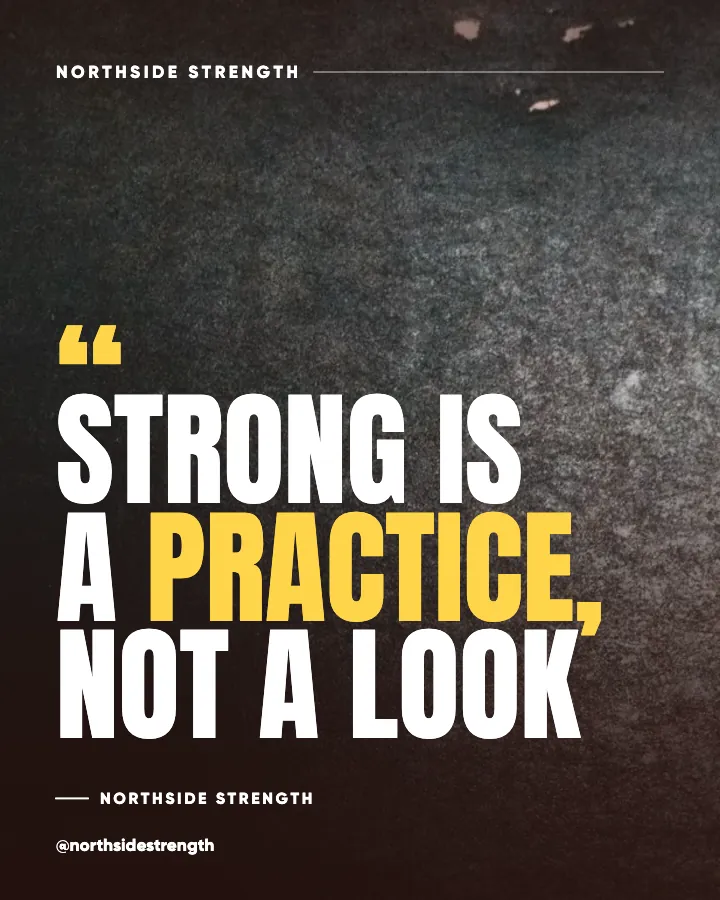
- One feed post a week is a save-worthy reference or how-to; one is a short shareable statement; one is proof or an offer.
- Stories rotate through four modes: behind the scenes, a question or poll, a reshare of that day's feed post with a comment, and a direct offer with a link sticker.
The feed posts are the expensive part, so they get batched, which is the subject of the 90-minute weekly planning routine. The Stories are cheap and should stay cheap; if a Story takes fifteen minutes to make, you are doing the feed's job in the wrong place. If you would rather have both lanes planned for you, Creobee's weekly posting schedule makes the feed posts and a designed 9:16 Story for most days of the week, each with its own time.
How many Stories a day should a small business post?
Fewer than you think, and consistently. One to three frames on most days keeps you near the front of followers' Story trays without becoming the account people tap past. Ten frames of a trade show once a month does not do that. Consistency here is a retention mechanism: it is how followers who liked one post keep encountering you until they are ready to buy, the same logic as the drip approach in retention through content drips.
Turning one 4:5 post into a Story, the right way
The cheapest Story you will ever make is a reshare of your own feed post, and it is also one of the most effective, because it tells followers who missed the post in the feed that it exists. The bad version is tapping the share icon and posting the default sticker with nothing added. The good version takes one extra minute.
- Share the post to your Story from the paper-plane icon, or place the 1080 by 1350 export on a 1080 by 1920 canvas in your brand background color.
- Add one line of text above or below the post that gives a reason to tap: "The full list is in the post" or "This took me a year to learn."
- Add a poll, question or link sticker so the Story invites an action instead of a glance.
- Keep every element inside the safe zone.
That last step is where most reshares go wrong. The top and bottom of a Story are covered by the progress bar, your name and the reply field. Meta documents the exact margins on its page about text overlays and the safe zone for Stories and Reels. A 4:5 post centered on a 9:16 canvas leaves 285 pixels above and below, which clears the interface comfortably; your added text and stickers go in that band, but away from the very top and very bottom. The dimensions for every format are in the Instagram post size cheat sheet, the 9:16 canvas has its own page in the Instagram Story size guide, and Buffer's size guide is a good cross-check.
Should I put my offer in the feed or in Stories?
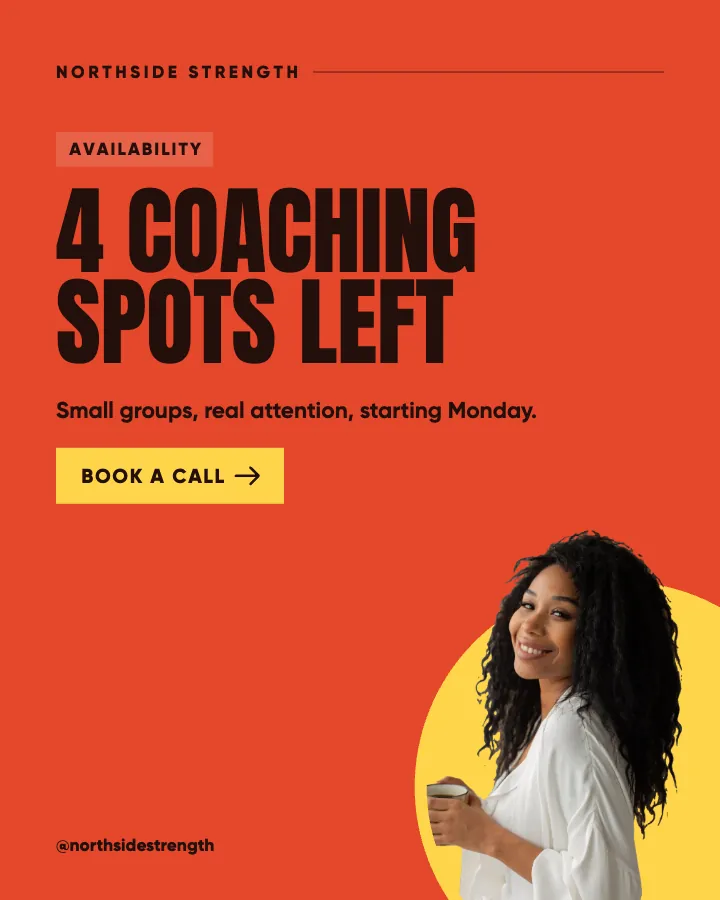
Both, but differently. In the feed, an offer post is permanent and public, so it should read like a product page: who it is for, what they get, one call to action. In Stories, the offer is a conversation: show the thing, say why this week, add the link sticker, and answer the replies. Stories are where I would send someone to book, buy or subscribe, because the link sticker is one tap and the audience is already warm. The feed's job is to bring that audience in, and a post designed for saves and shares does it best; the mechanics are in saves and shares, the metrics that grow your account.
One caveat: link stickers convert the people who already trust you, and that trust was earned by the feed. If the feed goes quiet for a month, Stories offers get quieter too, on a delay.
Do this this week
Produce three 4:5 feed posts in one sitting: one reference, one relatable statement, one proof or offer. Schedule them for days you can reply to comments. Then, on each of those days, reshare the post to your Story with one line of added context and one sticker, inside the safe zone. On the other days, post one Story from your phone in under five minutes. Track two numbers for the week: reach on the feed posts and link taps or replies on the Stories. If both move, the split is working; if only one does, that is the half of the funnel to fix first. Many small businesses find the link-sticker step feeds an email list better than a sale, and converting social followers to email subscribers explains why.
Put it into practice
Turn this into posts designed for your feed
Paste your website or say what you do. Creobee plans, writes and designs your posts about it as one feed in your logo and colors, captions included, and on Autopilot it posts them for you.
How the Instagram feed design works