Cross-Posting on Social Media Without Looking Lazy
Cross-posting on social media without looking lazy: keep one branded graphic, rewrite the caption for Instagram, LinkedIn, Pinterest and Facebook in 20 minutes.
Cross-posting looks lazy when the caption is wrong for the platform, not when the image repeats. Keep the branded graphic identical everywhere, then rewrite the words for each audience: conversational with keywords on Instagram, text-first on LinkedIn, a search title on Pinterest, two plain sentences on Facebook. Twenty minutes covers all four.
What gives cross-posting away
Nobody has ever unfollowed me because the same image appeared on two networks. Audiences barely overlap, and the few people who follow you everywhere are fans who do not mind. What they do notice is a LinkedIn post that opens with "link in bio," a Pinterest pin captioned "double tap if you agree," or a Facebook post with eleven hashtags. The tell is not the picture. It is the words in the wrong dialect.
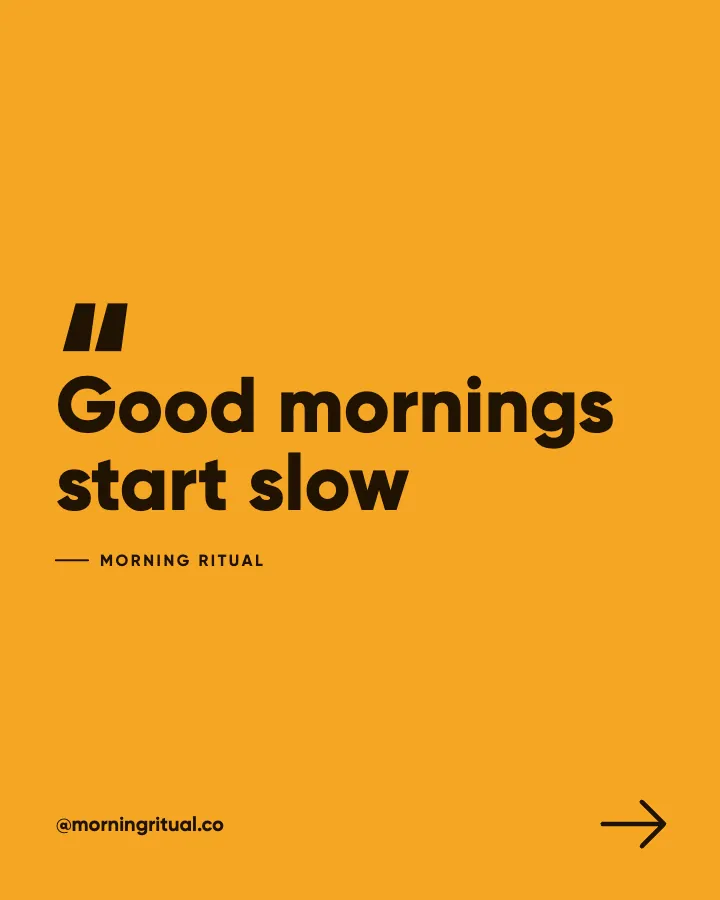
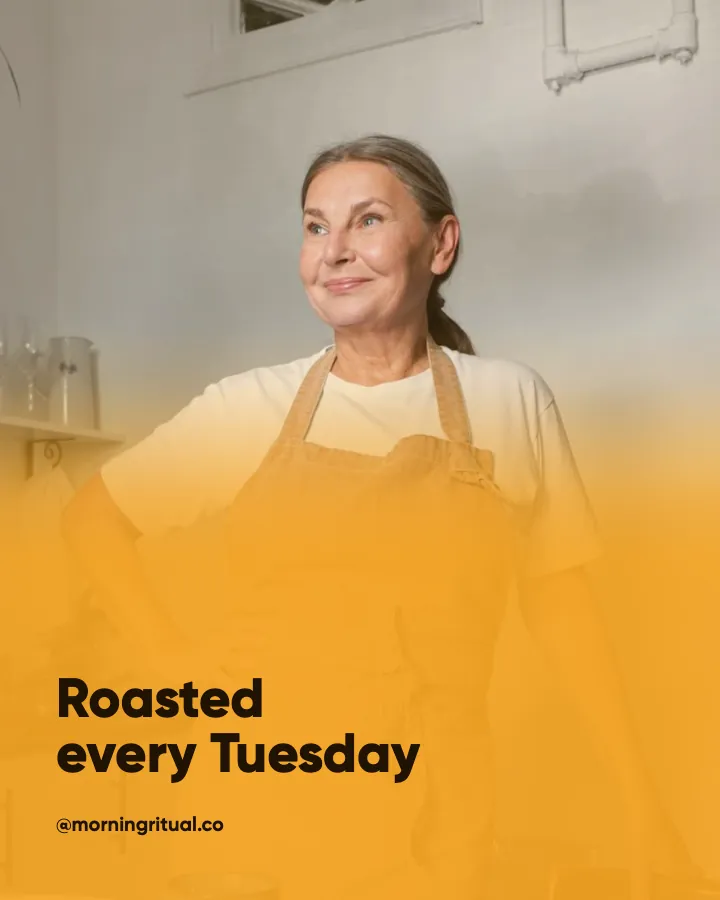
So I split every piece of content into two layers. The graphic is the fixed layer: same 1080 by 1350 branded image, same headline, same logo, exported once from a template or an AI social media post generator. The caption is the variable layer, written fresh for each platform in its own register. This is the same principle as the content repurpose playbook, where one idea becomes eight assets, except here the asset stays put and only the framing moves.
Why does the same image work everywhere?
Because a branded 4:5 graphic is platform-neutral by design. It is portrait, so it holds a phone screen on every network. It carries one short line of text, so it reads at any size. It has your logo and palette, so it does recognition work no matter where it lands. Instagram, LinkedIn and Facebook all display it fully; Pinterest displays it fully and simply prefers a slightly taller frame.
What would not work is a graphic full of platform-specific cues: a "swipe up" arrow, an Instagram-style handle, a "save this" badge. Keep those out of the image and put them in the caption where they belong.
What to change on each platform
Here is the four-caption template I use. The graphic is a text post that says "Stop posting daily. Start posting on purpose."
Instagram: conversational, first person, two or three short paragraphs, with the words a customer would search for written naturally into the first two lines ("posting schedule," "small business Instagram"). End with one specific ask, usually a save or a comment. Three to five hashtags at the end if any. This is the version closest to how I talk.
LinkedIn: the text is the post. A first line that stands on its own above the fold, then a short story or argument in 120 to 250 words, then a question or an opinion, no hashtags or one at most. The graphic is the supporting act, not the headline. I wrote about why the picture has to be quieter there in LinkedIn image posts for founders. LinkedIn's own advice on increasing distribution comes down to writing for a specific audience consistently, which is exactly what the platform-native caption does.
Pinterest: a title that is a search phrase ("Instagram posting schedule for small business owners"), a two-sentence description that uses the phrase once more plus one related phrase, a board with an equally specific name, and a link to a page you own. No conversational tone, no ask; pinners are searching, not chatting. The reasoning is in Pinterest for small businesses, and Pinterest's creative best practices back up the vertical-format, clear-text, visible-brand approach the graphic already follows.
Facebook: two or three plain sentences that make sense to someone who has never heard of you and saw the post shared in a group, a question to invite comments, no hashtags. Shorter than Instagram, warmer than LinkedIn. Whether Facebook is worth even those two sentences depends on your customers, and I answered that honestly in are Facebook Page posts still worth it.
What should stay the same across platforms?
- The graphic file itself, pixel for pixel. Consistency across networks is what makes a stranger recognize you the second time.
- The core claim. Every caption defends the same headline; only the framing and length change.
- Your names for things. If you call it a "content sprint" on Instagram, do not call it a "batching session" on LinkedIn.
- The destination. Every caption that links points to the same page, so you can measure which platform actually sent people.
- Your voice. Register changes (more casual, more analytical), but you still sound like one person.
The twenty-minute routine
I do this once per post, right after the graphic is exported, while the idea is fresh. Writing all four captions at once is faster than coming back three times, because the argument is already loaded in my head.
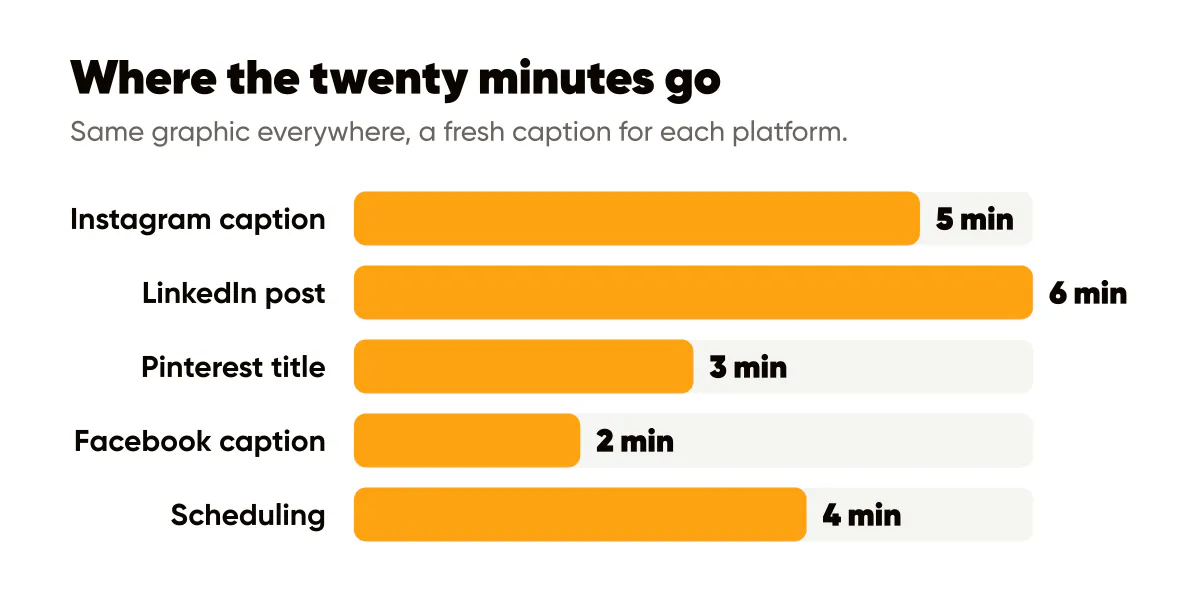
- Minutes 0 to 5: write the Instagram caption first. It is the most natural version and everything else is a translation of it.
- Minutes 5 to 11: expand it into the LinkedIn post. Take the strongest sentence from the Instagram caption as the first line, then add the story or the reason behind it.
- Minutes 11 to 14: compress it into the Pinterest title and description. Replace every conversational phrase with the search phrase.
- Minutes 14 to 16: cut the Instagram caption down to two sentences and a question for Facebook.
- Minutes 16 to 20: schedule. Instagram and Facebook go through Meta Business Suite in one step; LinkedIn and Pinterest each take a minute in their own schedulers.
Twenty minutes is realistic once the habit exists. The first few times take thirty, mostly because you will be tempted to redesign the graphic for each platform. Resist. The whole return of this routine comes from making the image once.
Should you post everywhere on the same day?
I do not. Instagram and Facebook go out together because Business Suite makes it free. LinkedIn goes out a day later so the same idea gets a second life, and because the audiences barely overlap, nobody notices. Pinterest goes whenever, because pins are discovered by search over weeks, not by timing. If a piece flops on Instagram, I still post it to the others; my Instagram followers and my LinkedIn readers do not agree on what is interesting, and that disagreement is data.
Do this this week
Take the next branded graphic you make and, before you post it anywhere, write all four captions in one sitting using the split above. Post the Instagram and Facebook versions the same day, LinkedIn the next, Pinterest whenever. After two weeks, check which platform sent the most profile visits or link clicks. Then keep doing it for every post, and let the batch of graphics you already produce do double or quadruple duty. If you make your posts in batches, the process for producing the graphics in the first place is in how to batch-create 30 Instagram posts in one hour; the captions above are the next twenty minutes after that hour.
Put it into practice
Turn this into posts designed for your feed
Paste your website or say what you do. Creobee plans, writes and designs your posts about it as one feed in your logo and colors, captions included, and on Autopilot it posts them for you.
How the AI content calendar generator works